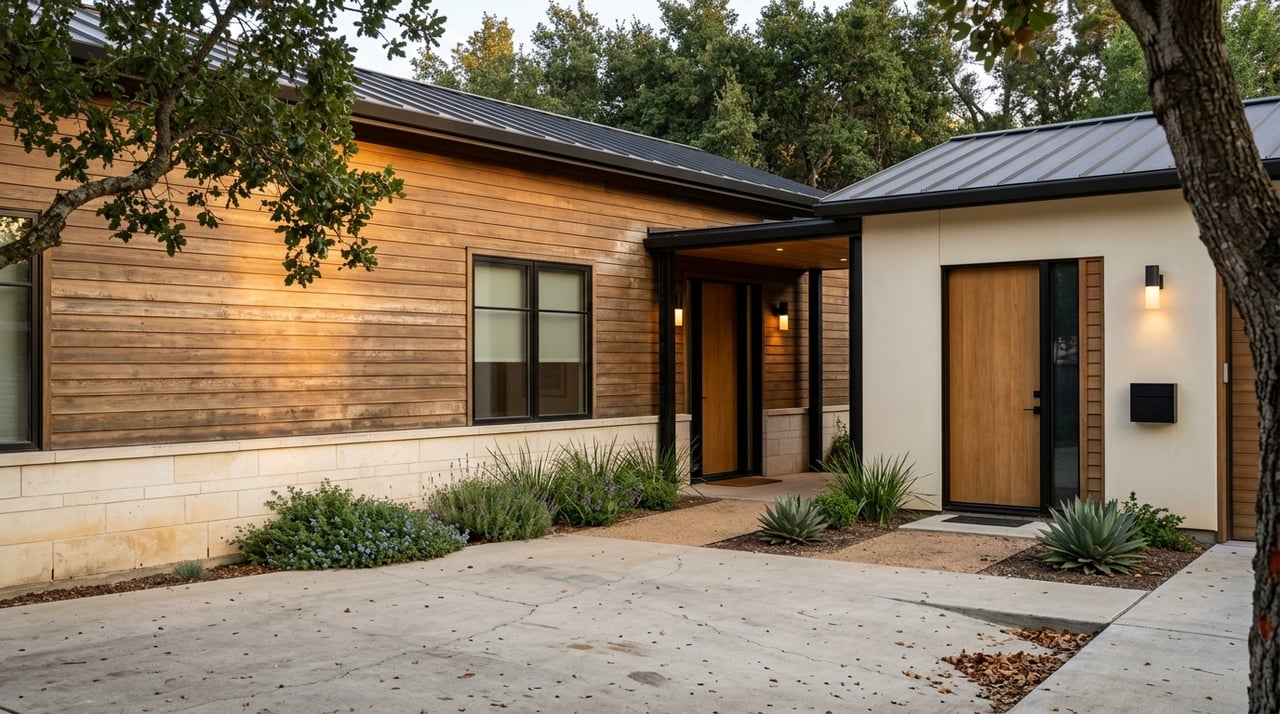
Creative Ways To House Hack A Home In Santa Clara
June 25, 2026
June 25, 2026
Wondering if you can make a Santa Clara home help pay for itself? You are not alone. In a market where monthly housing costs matter, house hacking can be a smart way to lower your effective cost of ownership, create flexibility, and make better use of the space you already have. The key is choosing a setup that fits both your goals and Santa Clara’s local rules. Let’s dive in.
House hacking simply means living in a property while using part of it to generate income or offset costs. In Santa Clara, that can look very different depending on the home, the lot, and whether you stay within normal residential use or create a permitted second unit.
For many homeowners, the appeal is straightforward. You may be able to rent a room, convert existing space, or build an accessory dwelling unit to create long-term rental income. That can help with monthly expenses while giving you more flexibility for future plans.
Santa Clara is especially practical for this strategy because the city allows several ADU and JADU pathways. At the same time, the details matter. A setup that seems simple on paper can trigger different zoning or permit requirements once you move beyond a standard owner-occupied arrangement.
If you want the lowest-cost entry point, renting out a bedroom or a portion of the main house is often the easiest place to start. You may not need to build anything new, and you can test whether shared living works for your lifestyle before taking on a larger project.
That said, Santa Clara treats a boarding or rooming house as a separate use when lodging, or lodging and meals, is provided for compensation to two or more persons. If your plan involves renting multiple rooms, you should confirm that the arrangement still fits ordinary residential use before you move forward.
This matters for buyers too. If you are purchasing with a multi-room rental idea in mind, it is worth checking zoning early rather than assuming the property can support that plan.
Some homes already have a layout that works well for semi-independent living. You might have a separate entrance, a rear suite, or finished space that feels distinct from the rest of the house.
This kind of setup can create more privacy than a standard roommate arrangement. It may also make the home easier to use for long-term flexibility, whether your eventual goal is rental income, guest space, or housing for extended family.
One of the most creative house hacks in Santa Clara is turning existing space into a legal secondary unit. The city says ADUs can be attached, detached, or created by converting existing space such as garages or basements.
A conversion can be attractive because you are working with space that already exists. Santa Clara’s ADU handout says converted ADUs can come from existing accessory structures like garages, storage areas, and pool houses. If the conversion stays within the existing footprint, there is no setback requirement, no additional off-street parking requirement, and no maximum unit size under the city’s conversion rules.
For homeowners who want rental income without changing the yard too much, this can be one of the most efficient paths.
If your lot has usable yard area, a detached ADU can create the cleanest separation between your living space and your tenant’s. That extra privacy is often what makes this option especially appealing for long-term house hacking.
Santa Clara’s guidance says detached ADUs have no minimum parcel size, do not require parking, and may be built with 4-foot side and rear setbacks. Size caps depend on lot size, so the property itself will shape what is possible.
This option usually costs more upfront than renting a room or converting part of the main home. Still, it can create a more independent rental setup and preserve more day-to-day privacy.
An attached ADU can be a good middle ground if you want a separate unit but do not have the ideal yard layout for a detached structure. In Santa Clara, attached ADUs can generally be up to 1,000 square feet or 50 percent of the main unit, whichever is less.
The city also says attached ADUs need exterior access and must meet local setback and height rules. In some cases, a second-story attached ADU on a single-story home may require Architectural Review.
This route can work well when you want to expand the home’s functionality while keeping the overall structure connected.
If you own a single-family home, a JADU may be one of the most budget-friendly ways to house hack. Santa Clara says a JADU must be within a single-family residence and is limited to 500 square feet.
JADUs are smaller than standard ADUs, but that is part of the appeal. They often let you create a compact rental unit within the existing home rather than building a larger standalone structure.
Owner-occupancy rules can depend on the layout. State guidance reflected in Santa Clara’s handout says owner occupancy is required when a JADU shares sanitation facilities with the primary structure, but not when it does not. That is an important detail to verify before you finalize your plan.
Not every lot supports every house-hack idea in the same way. City and county guidance both make clear that ADU and JADU options depend on parcel type and existing structures.
In some cases, a qualifying lot may support both an ADU and a JADU. In others, the home’s current layout, lot configuration, or existing accessory structures will shape your options.
Before you spend money on plans, make sure the physical site works. Santa Clara says ADUs may not be located within sight-distance triangles, and accessory structures cannot be placed in easements.
That means a backyard that looks large enough at first glance may still have usable-area limits. The city also advises checking zoning, reviewing whether the property is in or near the Historic Resource Inventory, and consulting Public Works about easements before moving ahead.
If the property is listed in the California Register of Historical Resources, additional rules may apply. Santa Clara says these properties may be regulated on parking, height, setbacks, landscape, design review, and unit size.
The city also notes that adding an ADU to that type of property requires a Significant Property Alteration permit. If you are buying an older home with character and future income potential in mind, this should be part of your due diligence.
Some homes are marketed with bonus spaces, converted garages, or existing backyard units. Before you count on that space as legal rental income, verify its permit status and whether it can be legalized if needed.
State guidance says local agencies cannot deny permits for certain unpermitted ADUs built before January 1, 2020 solely because they violate building standards or ADU rules, and county materials describe a legalization path for pre-2020 units. Still, that does not mean every existing setup is automatically rentable or financeable today.
In Santa Clara, ADU and JADU projects are generally handled through the building permit process. That can be helpful for owners who want a clearer path than a discretionary approval process.
State HCD guidance says ADU and JADU applications are ministerial, without discretionary review or a hearing. The permitting agency must send a completeness notice within 15 business days and approve or deny within 60 days after receiving a complete application.
That does not guarantee a fast build, but it does give you a more defined framework for planning your timeline.
House hacking works best when the numbers are realistic from the start. If you are buying a home with an ADU plan in mind, or financing improvements after closing, it helps to know how lenders may view potential rental income.
Fannie Mae allows rental income from one ADU to count toward qualifying income on certain one-unit principal residence purchases and limited cash-out refinances when underwriting requirements are met. Freddie Mac also allows financing for properties with ADUs, with rental income treatment based on its guidelines.
HUD says FHA lenders may count ADU rental income in some cases as well. County ADU materials also note that many homeowners combine savings, family funds, and loans such as HELOCs or cash-out refinances, and recommend having financing lined up before construction starts.
For owner-occupants using VA financing, the property still needs to meet occupancy and lender requirements. If you plan to use projected ADU income, confirm the details with your lender early so you are not building your budget around assumptions.
Rental income is generally taxable. IRS Publication 527 says rent must be reported, and ordinary and necessary rental expenses can usually be deducted. If you use part of the property personally and rent another part, expenses may need to be divided between personal and rental use.
California’s Franchise Tax Board says California residents are taxed on all rental income, and rental income and losses are generally treated as passive activity income. This is one reason it helps to think beyond just the monthly rent number and look at the full financial picture.
You should also keep property taxes in mind. Santa Clara County’s ADU FAQ says the primary house is not reassessed, but your property tax bill may increase based on the added value of the ADU.
A creative idea still needs to fit local rental rules. In Santa Clara, ADUs cannot be rented for terms shorter than 30 days, and JADUs may not be used as short-term rentals.
That means house hacking here is better framed as a long-term strategy, not a quick vacation-rental play. If you are comparing options, that distinction can make a big difference in how you underwrite the opportunity.
If landlord or tenant issues come up later, Santa Clara points residents to mediation and legal-aid resources including Project Sentinel, Bay Area Legal Aid, the Law Foundation of Silicon Valley, and Asian Law Alliance. Having those local resources in mind can be useful before you ever need them.
The best setup depends on your budget, timeline, privacy needs, and the property itself. If you want to move quickly and spend less upfront, renting a room or using an existing private area may be the right first step.
If you want a more durable long-term strategy, a permitted ADU or JADU may offer better separation and stronger resale utility. The right choice is usually the one that fits both your day-to-day life and Santa Clara’s rules without forcing the property into a use it was never meant to support.
If you are exploring homes in Santa Clara with house-hack potential, it helps to look at each property through both a market lens and a practical feasibility lens. That is where local guidance can save you time, money, and stress.
When you want help evaluating a home’s layout, income potential, and likely next steps, connect with Amy Le for practical, locally informed guidance.
Get assistance in determining current property value, crafting a competitive offer, writing and negotiating a contract, and much more. Contact me today.